
Dispute Negative Reviews That Shouldn't Be There
Integrations
We integrate with the most popular tools and platforms to help you get the most out of your data.


What you get with Dispute Management
Catch the reviews that shouldn't be live in the first place
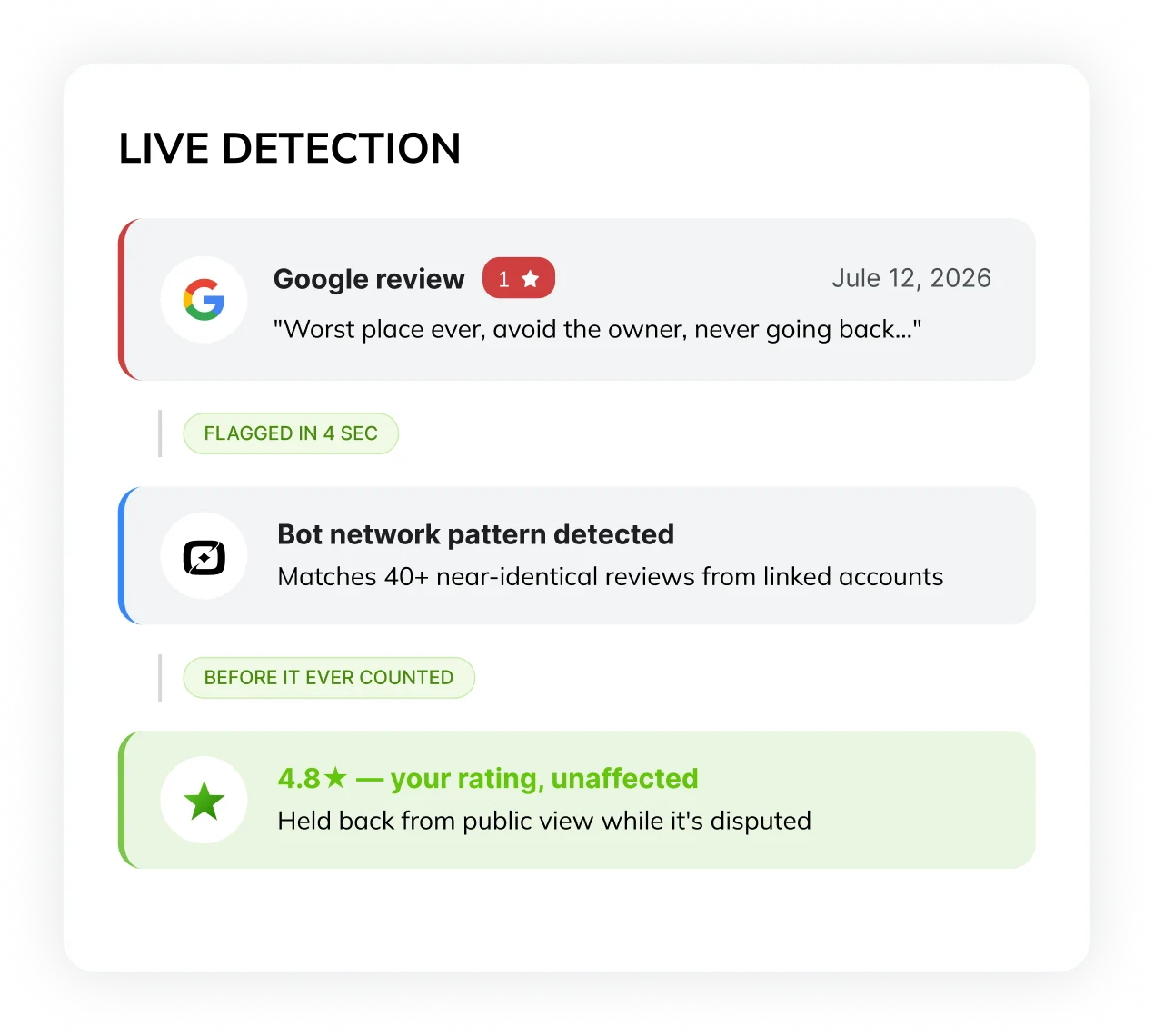
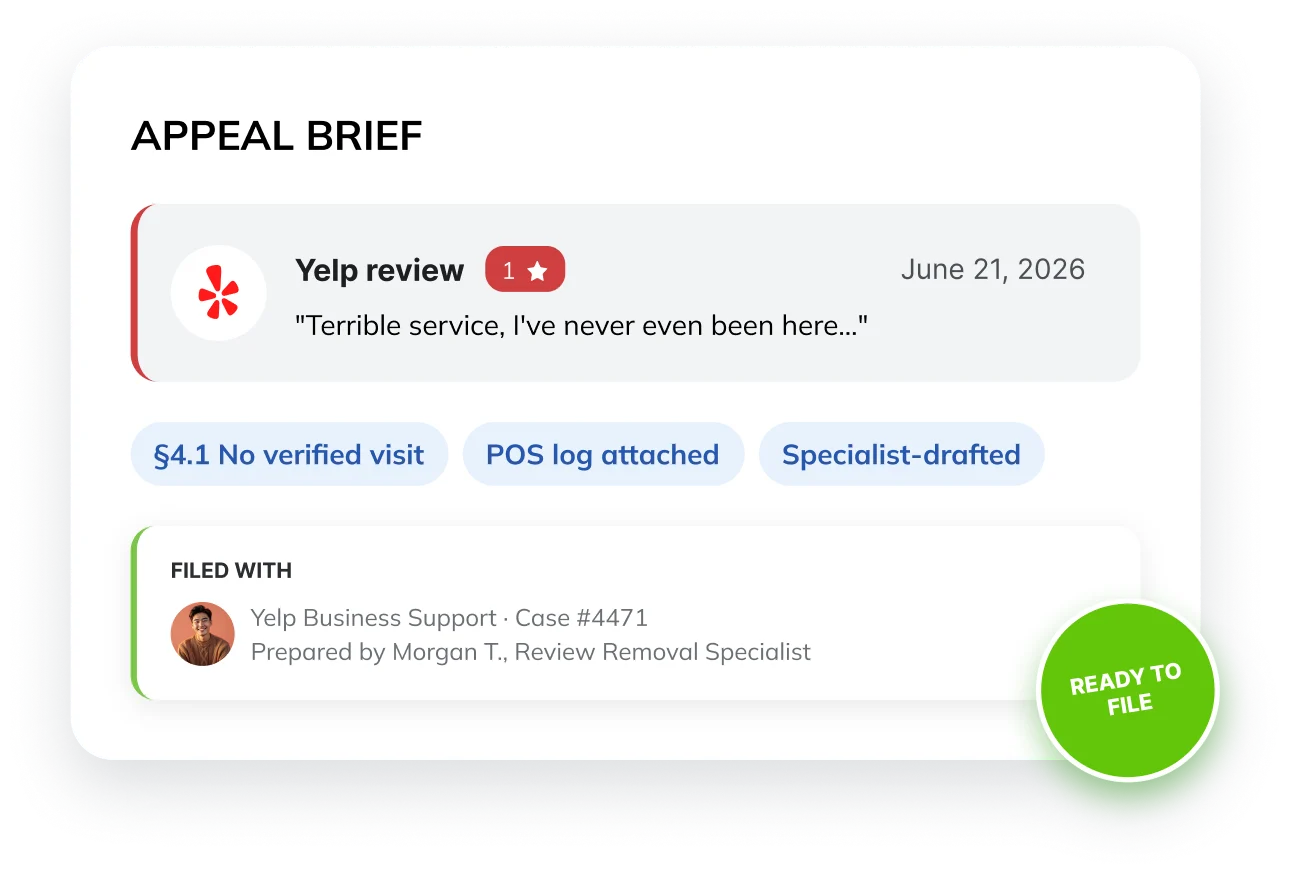
Our analysts watch for suspicious reviews as soon as they appear — bot networks, competitor sabotage, and serial defamers get caught early, before they drag down your rating.
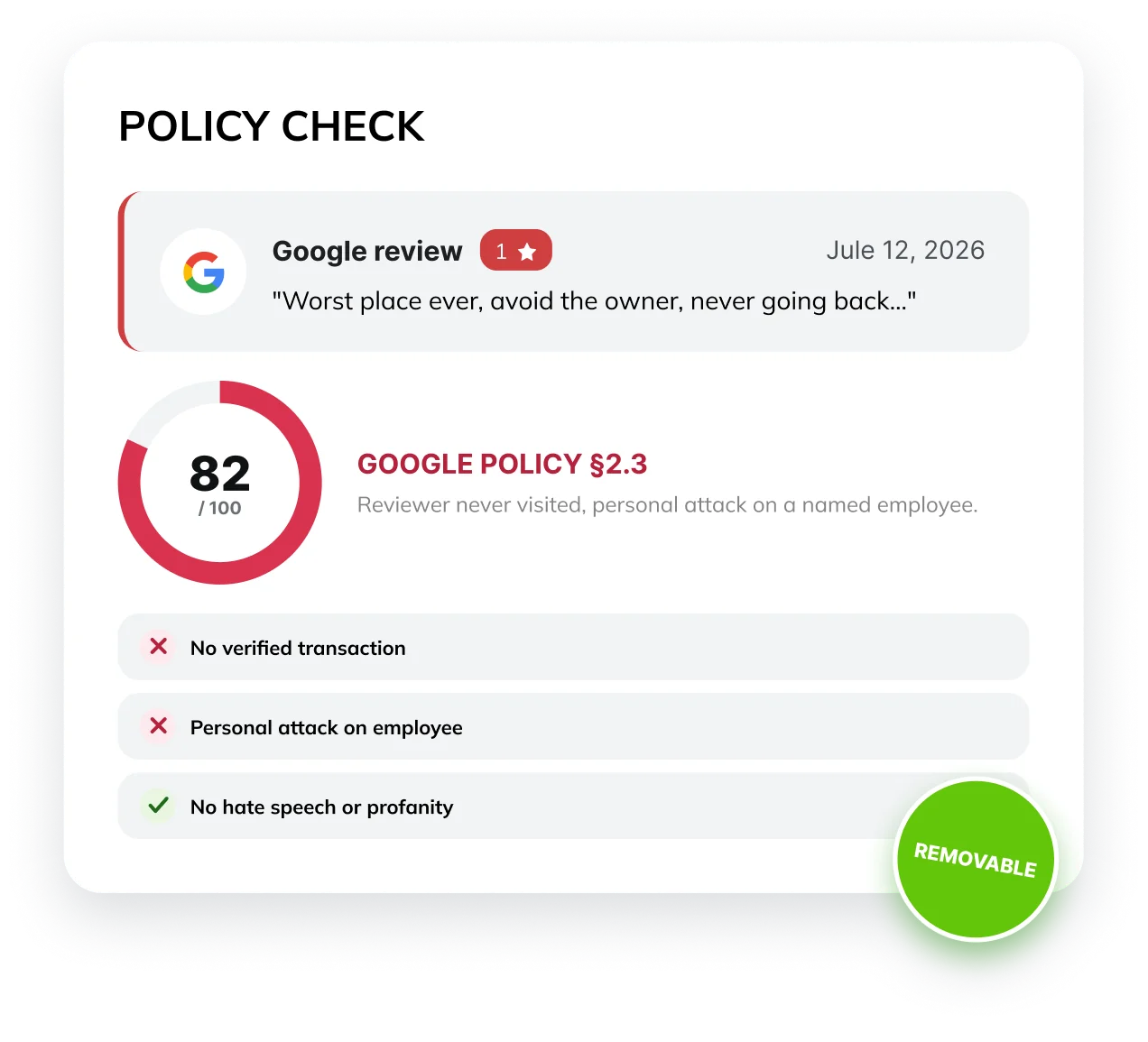
Every negative review is checked against the policy rules of Google, Yelp, Facebook, and other platforms to identify what’s removable and what isn’t.
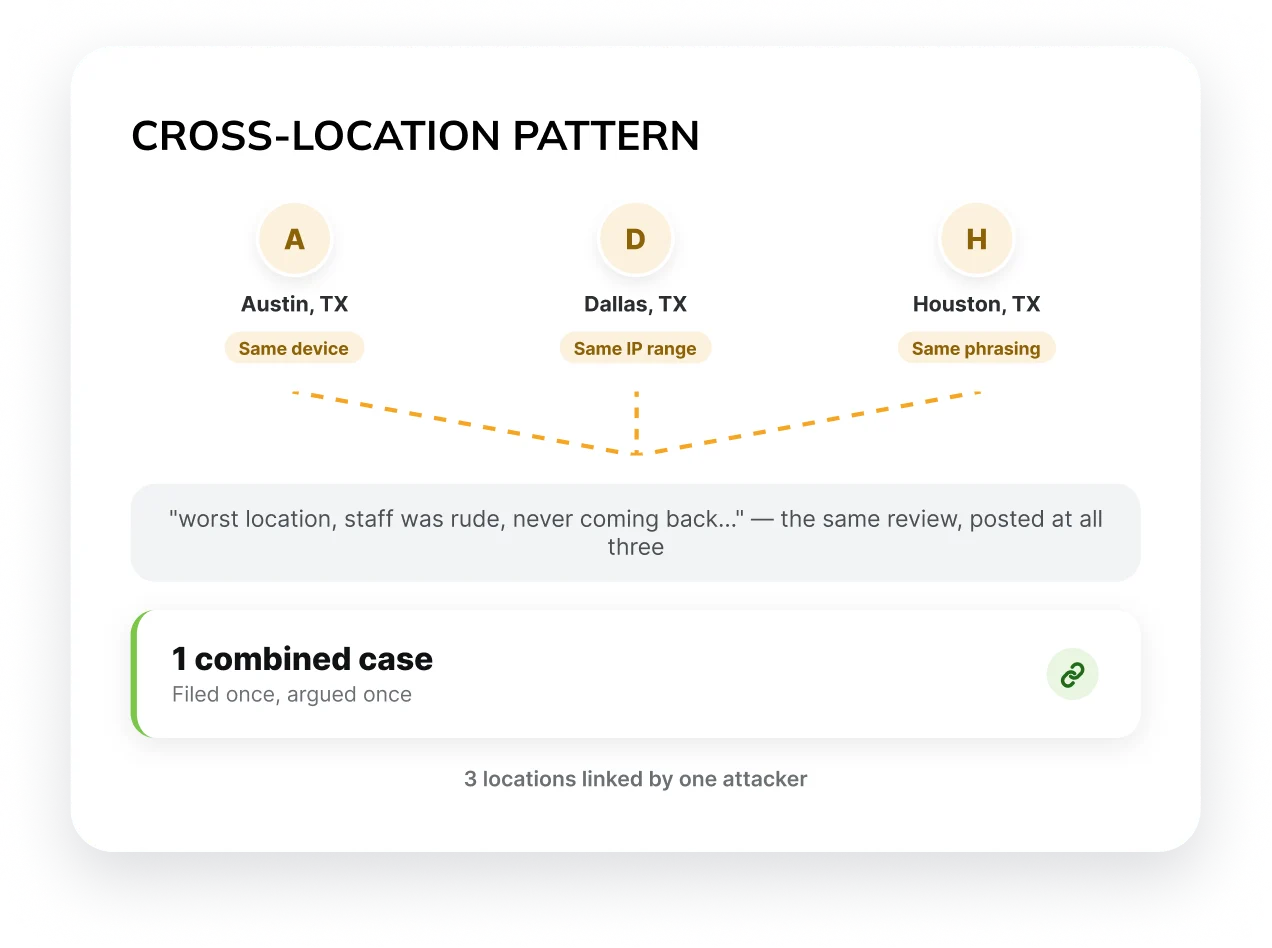
When the same attacker hits multiple locations, we connect the dots and build a single, stronger dispute case.
A removal team, not a removal button
Removal requests are prepared by specialists who know exactly what each platform requires — the right citations, evidence, and framing.
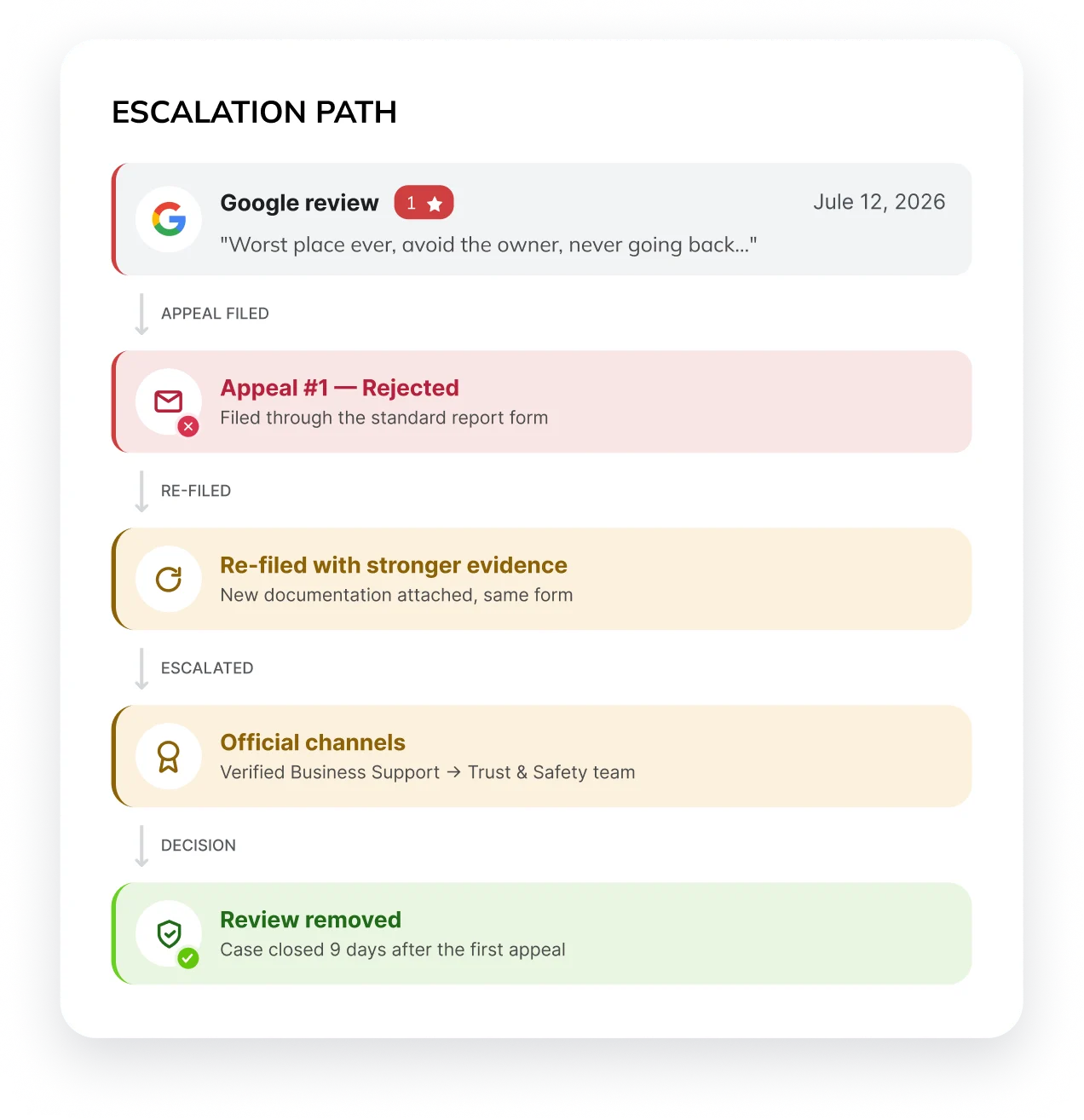
Most removals don’t succeed on the first try. We re-file, escalate to platform support, and use formal channels until we get a decision.
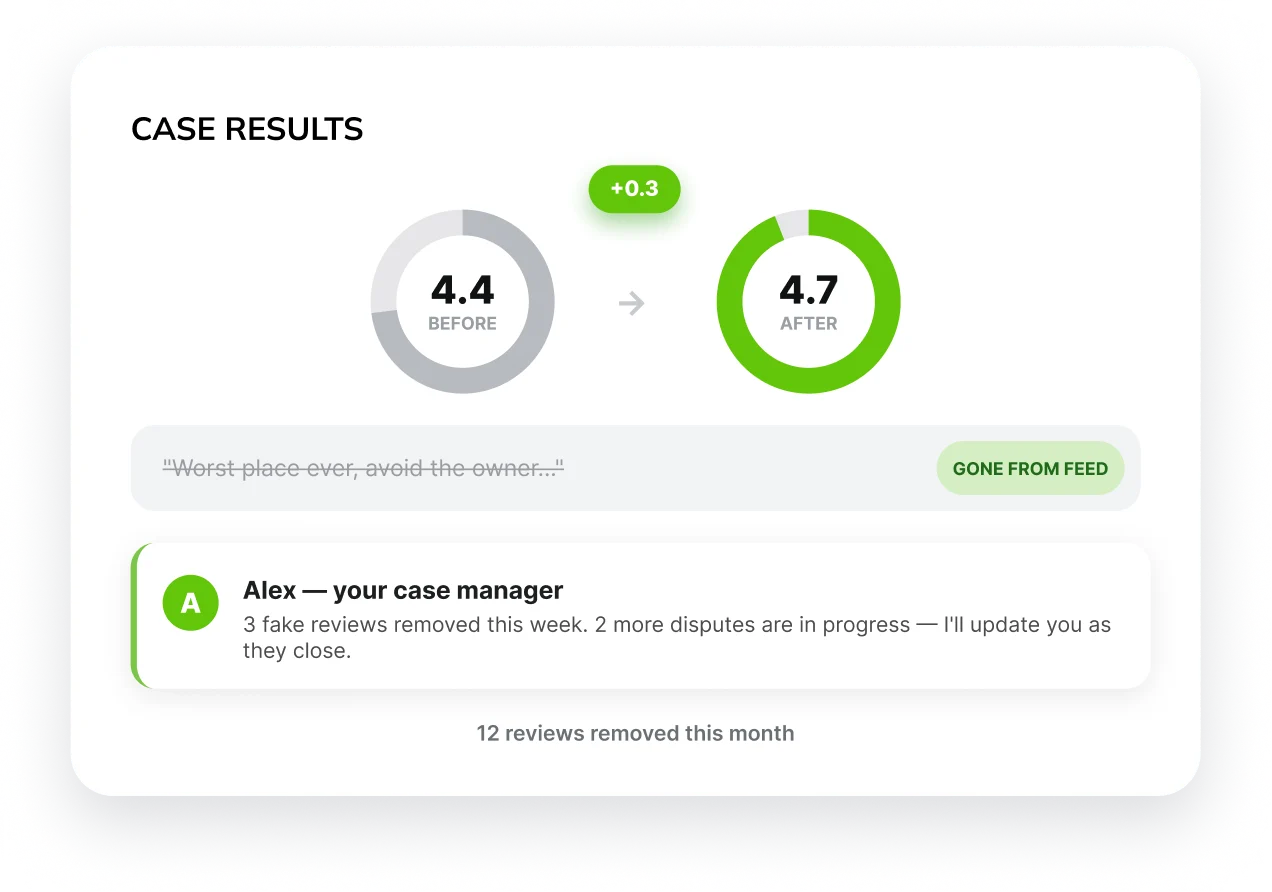
As violations come down, the change shows up where it counts — in your ratings and review feed — while your manager keeps you posted on each case.
Not a Tool. A Team.
Escape the choice between a dashboard you have to run and an agency that keeps you in the dark.
Testimonials
Discover how companies like yours improve their reputation and grow faster with our platform.

Get a platform demo
Frequently Asked Questions
Reviews that violate a platform’s content policy are removable. That includes fake reviews from people who were never customers, defamation, hate speech, profanity, personal attacks against staff, reviews posted by former employees or competitors, reviews about a different business, off-topic content, and reviews with images that violate privacy. Honest negative reviews from real customers — even harsh ones — are not removable, and we’ll tell you so up front.
It depends on the type of review and the platform. For clear policy violations (fake profiles, defamation, off-topic content), our success rate is high. For borderline cases, we re-file and escalate, and many of those eventually come down. Your personal manager keeps you updated on each case — which disputes succeeded, which are still in progress, and which were closed — so you’re never guessing.
Most disputes get a decision from the platform within 5–14 days. Complex cases — especially ones that require escalation to a senior reviewer or legal channel — can take longer. We don’t stop after the first answer; if a removal is denied and we believe the case is strong, we re-file with additional evidence.
Our team gathers and structures the evidence. We document the policy violation, build the case file, and submit it through the right channel. If you have specific information (for example, proof that a reviewer was never a customer), we’ll ask for it during onboarding or as cases come up — but the assembly and filing is our job.
STARTER includes up to 3 removal attempts per location per month, GROWTH includes 8, and ENTERPRISE is unlimited. GROWTH and ENTERPRISE clients also get a dedicated removal specialist and priority escalation, so complex cases move faster.
We don’t try to remove honest feedback — even when it’s painful. Instead, we write a professional, on-brand response that acknowledges the issue, demonstrates accountability, and gives future readers context. Good responses to bad reviews often do more for your rating than removals do.
About Dispute Management
What it means to dispute a review
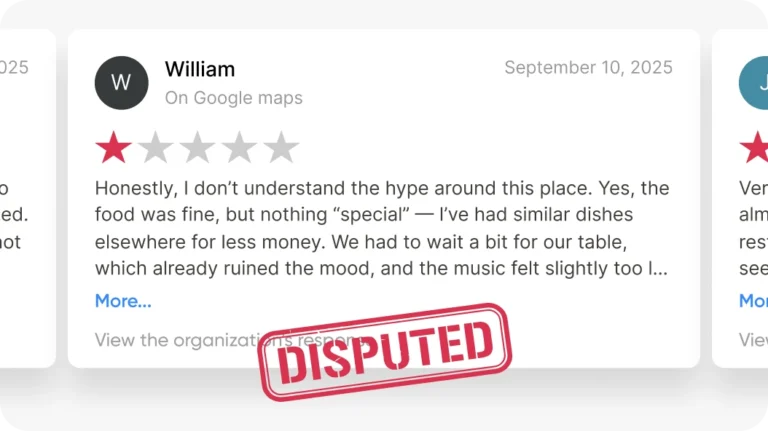
To dispute a review is to formally ask the platform — Google, Yelp, Facebook, Tripadvisor, or another — to remove it for violating its content policy. Each platform has its own rules, appeal flow, and bar for what counts.
What you can’t dispute is honest criticism from a real customer, even when it’s blunt. What you can dispute, with the right documentation, are fake reviews, off-topic content, defamation, conflicts of interest (former employees, competitors), hate speech, and other categories named in each platform’s guidelines. The hard part isn’t the rules — it’s the process. Most disputes go through small web forms with no human on the other side, and without structured evidence even legitimate cases get auto-rejected.
Why one removed review outweighs several new ones
When a one-star review lands on a small review base, the average drops fast — and recovering it through new positive reviews alone can take many five-star reviews to offset, especially if the bad one is recent or sits at the top of your profile. Removing a fake or policy-violating review does the opposite: the average moves back up immediately, and your search placement, AI snippet, and recommendation status improve with it. That’s why removal isn’t a cleanup task — it’s a growth lever.
What ORM Service does for you
Dispute management here is a service, not a button. It runs in four stages:
Detection — our analysts monitor every new review across your locations in real time and score negatives against each platform’s policy rules to flag what’s removable. Evidence — for each case, our legal team documents the violated policy clause and builds a file with supporting proof and platform-specific framing, not a generic flag request. Filing & escalation — we submit through official channels, and when the first answer is “no,” we re-file with new evidence or escalate; many removals succeed on the second or third attempt. Transparency — your personal manager keeps you posted on every case (what was filed, where it stands, what’s next), and you see the impact in your live ratings and review feed. No monthly PDF, no black box.
Who needs it
Dispute management matters most when your negative reviews don’t match the experience you actually deliver — a spike of one-star reviews from non-customers, a competitor or former employee with a grudge, reviews posted about the wrong location, or policy-violating content that stays live because nobody flagged it properly. It’s especially valuable in hospitality, healthcare, legal, home services, automotive, retail, and any multi-location business where one reviewer can repeat-post across every site.
How it protects revenue
Your rating drives real money: research on Yelp restaurants has linked a one-star swing to a meaningful revenue change, and the effect cuts both ways. Beyond the rating, removal protects click-through (searchers skim the top reviews on your profile), AI summaries (tools like Google’s AI Overviews quote review language back to searchers), and Map Pack visibility (a falling average can drop you out of the three-pack). Run as an ongoing service rather than a one-off, dispute work keeps those forces working for you — month after month, location after location.

Recommended Resources


 Boost Your Reputation Now!