
Restaurant Reputation Management That Fills Tables and Protects Margins

Diners Read Reviews Before They Read Your Menu

From corner cafes to 50-unit franchise systems.
Whether you run one location or fifty, the playbook scales.

Every platform diners check before they book a table.
Google, Yelp, TripAdvisor, OpenTable, DoorDash, Uber Eats — all in one dashboard.

More positive reviews. Faster replies. Stronger local ranking.
The metrics that move covers and revenue.
Platform & Services
A dashboard you can open in 10 seconds, plus a team that does the work you don't have time for.
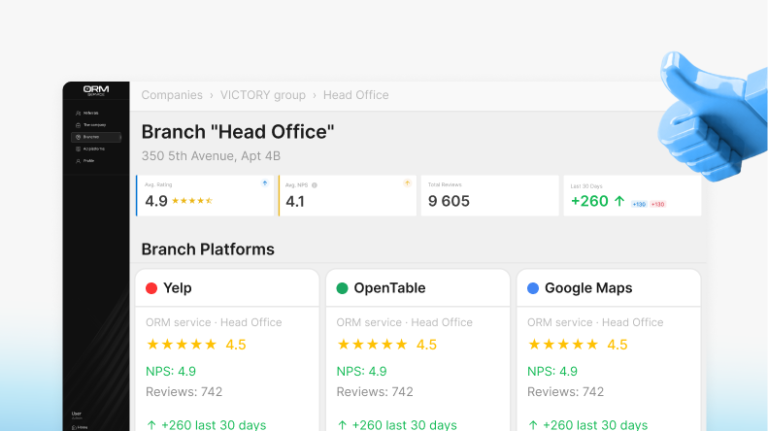
CENTRALIZED DASHBOARD
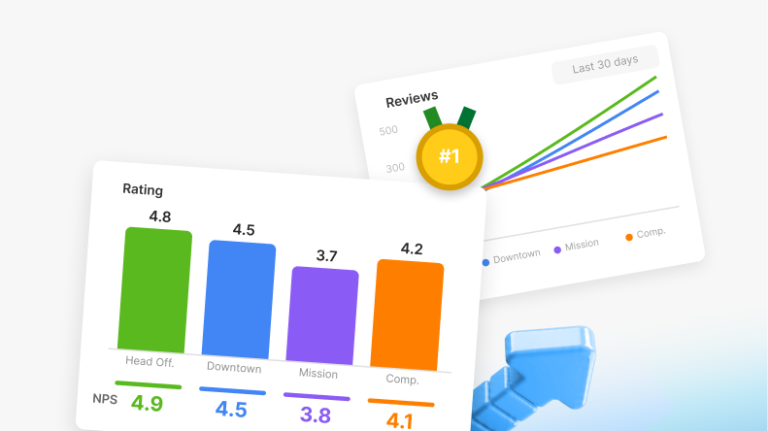
BENCHMARKING
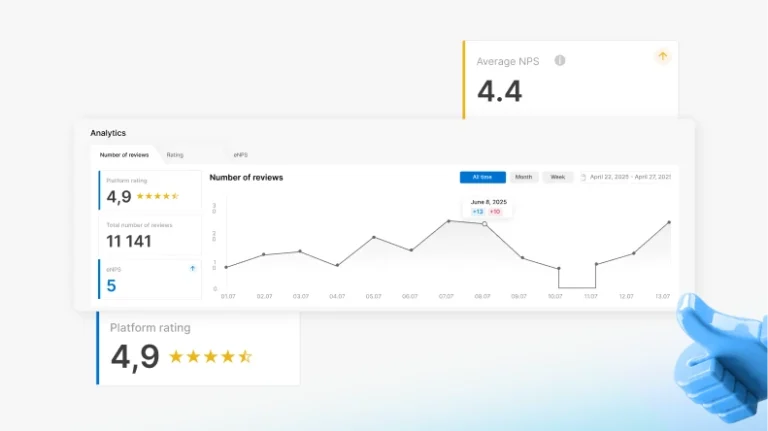
RATING TRENDS
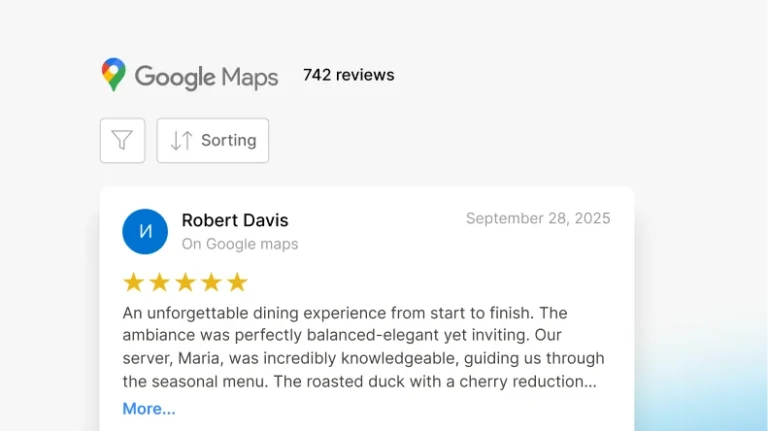
REVIEW MANAGEMENT
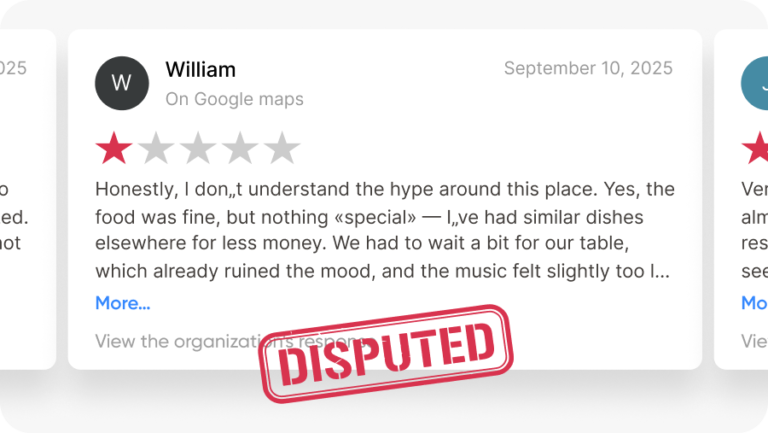
DISPUTING NEGATIVE REVIEWS
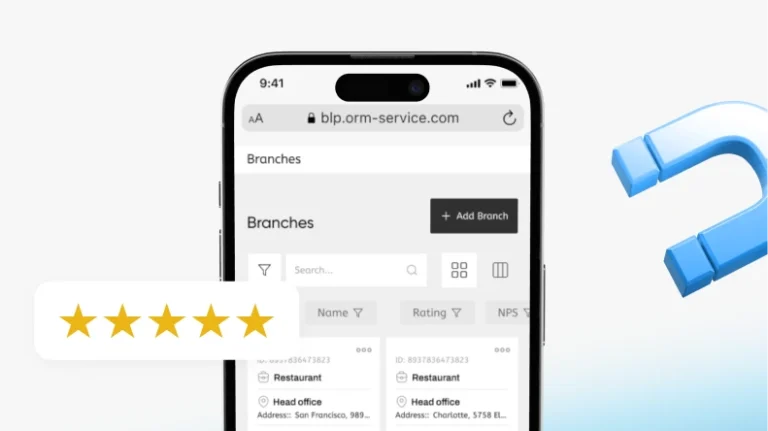
GATHERING POSITIVE REVIEWS
See it run on your restaurant data
Frequently Asked Questions
Everywhere your diners look. Google, Yelp, TripAdvisor, OpenTable, and Facebook for dine-in. DoorDash, Uber Eats, and Grubhub for delivery. All of them feed one dashboard with one response workflow, so nothing slips through the cracks.
We file formal disputes against reviews that break platform policy: fake reviewers, competitor sabotage, off-topic complaints (someone complaining about delivery on your dine-in listing, for example). The platform makes the final call. You get a written record of every dispute we filed and the outcome the platform returned.
At a glance, your dashboard shows which units are slipping — NPS dropping, platforms pulling them down, review volume shifting. Click into any location and the full review feed and per-platform ratings are right there. Problems that used to take a quarter to spot show up in days.
No incentives. No filtering. No review-gating. You get a downloadable QR code for the restaurant — drop it on the check, the table tent, or the menu, and diners who want to leave a review can do so with one scan. That’s how the platforms expect it to work, and it’s the only method that holds up long-term.
24-48 hours on STARTER, 4-12 hours on GROWTH, 2-4 hours on ENTERPRISE. For busy restaurants and franchise networks we usually recommend GROWTH or higher. Diners decide where to eat in the next hour, not the next week.
About Restaurant Reputation Management
What was posted this week counts for more than the rating you built two years ago, because the guest deciding where to eat tonight reads the top of the listing and rarely scrolls past it.
What is restaurant reputation management?
Restaurant reputation management is the ongoing practice of monitoring, answering, and improving reviews everywhere guests look before they pick a place to eat. That covers Google Business Profile, Yelp, TripAdvisor, OpenTable, and Facebook for dine-in, plus DoorDash, Uber Eats, and Grubhub for delivery.
The work has three parts that only function together. Reviews get seen the day they publish rather than at the end of the week. Each one gets an answer that does two jobs: it deals with the customer who wrote it, and it works on everyone who reads the listing afterwards. And reviews that break platform policy get disputed with documentation rather than absorbed into the average.
For restaurants the timing pressure is different from most industries. A diner deciding where to eat tonight reads what was posted this week, so response speed and review freshness carry more weight than a strong rating built two years ago.
Google, Yelp, and the delivery apps do not score you the same way
Google decides local pack placement on relevance, distance, and prominence, and review count and rating feed straight into prominence. That is why two similar restaurants on the same block rank differently, and why the one with 800 reviews at 4.4 often beats the one with 90 reviews at 4.7.
Yelp works on different logic. Its recommendation software decides which reviews are shown at all, so reviews from accounts with little history frequently end up hidden below the fold no matter how genuine they are. Yelp also instructs businesses not to solicit reviews and penalizes listings caught doing it, which means any strategy built on asking Yelp customers for stars eventually costs more than it earns.
Delivery platforms rate the order rather than the restaurant, and the customer rarely separates the two. A cold delivery, a missing drink, or a driver who took forty minutes lands on your score, and a low enough score affects your placement in the app. Those reviews need a different reply and a different dispute argument than a dine-in complaint, because the failure often happened after the food left your kitchen.
Why one bad Saturday costs three weeks
Reviews are not evenly distributed across time. A short-staffed Saturday produces a cluster of one-star posts inside 48 hours, and because recent reviews weigh more everywhere, that cluster hits the visible rating harder than the previous two months of steady fours and fives.
Two things pull the number back. The first is response speed, because a fast, specific, non-defensive reply changes how the next reader interprets the complaint. The second is volume, since a restaurant collecting reviews every week absorbs a bad night without a visible dent while one that collects nothing takes months to recover from the same night.
There is also a question of who writes the reply. A general manager who just finished a brutal service and opens Google on their phone is not in a position to write anything a prospective diner should read, and that reply then sits on the listing for years.
Getting more reviews without getting the listing flagged
Every platform has rules here, and the popular shortcuts break them:
- Incentives. A free dessert or a discount in exchange for a review is prohibited across every major platform.
- Review gating. Surveying guests first and sending only the happy ones to Google is against policy and detectable.
- Bulk requests from a marketing list. They produce a spike of reviews from accounts with no local history, which is exactly the pattern Yelp’s filter and Google’s spam systems are built to catch.
- Asking on Yelp at all. Yelp instructs businesses not to solicit reviews and penalizes listings caught doing it.
Each of those puts the listing itself at risk, and a filtered or flagged profile costs more than the reviews it produced.
What holds up is unglamorous. The restaurant gets a downloadable QR code for the check presenter, the table tent, or the menu, and guests who want to leave a review do it in one scan while they still remember the meal. No list, no incentive, no filtering, and every response arrives in your dashboard tied to that location.
What ORM Service does for restaurants
We run the work rather than handing you software to run. Every restaurant account is covered by the same four roles:
- An analyst monitoring every platform your guests use, so a drop on Yelp after Saturday service or a rating slide on delivery shows up as a pattern instead of a surprise.
- Writers answering reviews in your voice, negative and positive alike, because a listing where management only appears to argue with critics reads worse than one with no replies at all.
- A legal specialist filing disputes against fake reviewers, competitor sabotage, and off-topic content, then following each claim to a decision.
- A designer producing the QR assets for each location.
A personal manager keeps it coordinated, so there is one person to call rather than a support queue.
You see the same screen we work in. Each restaurant sits on one screen as a card with its rating, NPS, platform count, total reviews, and the reviews that arrived in the last 30 days, so a slide shows up as a number rather than a feeling. Open a location and dine-in and delivery reviews arrive in one feed with our reply next to each one, filtered by star rating or date. Checking what happened over the weekend takes a minute on a phone instead of six apps and a tab for each.
The dashboard also reads the reviews for you. Every review is analyzed for what guests actually mention, positive and negative, and each mention is filed into a category and a subcategory beneath it. The output is a chart: how positive and negative mentions split, which categories the negatives sit in, and what is underneath them. A 4.2 rating tells you something is off. The mention breakdown tells you the food scores fine, the complaints are wait time on weekends and order accuracy on delivery, and one of those is fixable this week.
Getting started takes a conversation rather than a project. We connect your profiles across dine-in and delivery platforms and agree the response voice with you, including what you are willing to offer publicly and what has to move to email. Nothing changes in your operation except that the laptop stays shut before service.
The quickest way to see it is a 15-minute demo run on your restaurant’s own reviews.
Which restaurants need it, and when it becomes urgent
Any restaurant whose guests arrive through search and choose on ratings benefits, from a single café to a fifty-unit franchise system. The threshold is usually crossed when one of three things happens.
- Delivery starts generating more complaints than dine-in, and nobody is separating the two.
- Reviews outpace whoever was answering them, so weeks go by with no replies during the busiest stretch of the year.
- A cluster of bad reviews drops the rating below a psychological line, most often 4.0 on Google, where diners start filtering the listing out entirely.
The third one is the expensive case, because a rating recovers far more slowly than it falls.
How reviews connect to covers and margin
Better ratings and consistent replies raise click-through from the local pack, and review volume and freshness support the ranking that generates those impressions in the first place. More impressions with a credible rating means more covers that did not require a discount, a delivery promotion, or a paid placement to acquire.
That is where the margin argument sits. A cover won through reputation costs nothing per head, while the same cover won through a third-party promotion arrives with a commission attached. Over a year the difference between a restaurant that manages its reviews and one that reacts to them shows up less in the star rating than in what it had to spend to fill the room.

 Boost Your Reputation Now!