
Multi-Location Reputation Management That Catches Weak Units Before They Cost You a Quarter

One Weak Location Can Drag the Whole Network Down

From 5-unit independents to 500-rooftop franchise systems.
Built for chains, franchises, and operator groups that own more than one address.

Brand, region, location: three views, one source of truth.
Drill from network average to a regional cluster to a single rooftop without switching tools.

Spot the underperformer before the quarter ends.
Total number of ratings, average rating and NPS across every platform — all visible at a glance.
Platform & Services
A dashboard built for networks, plus a team that handles the execution across every location. Your operations stay focused on running the business.
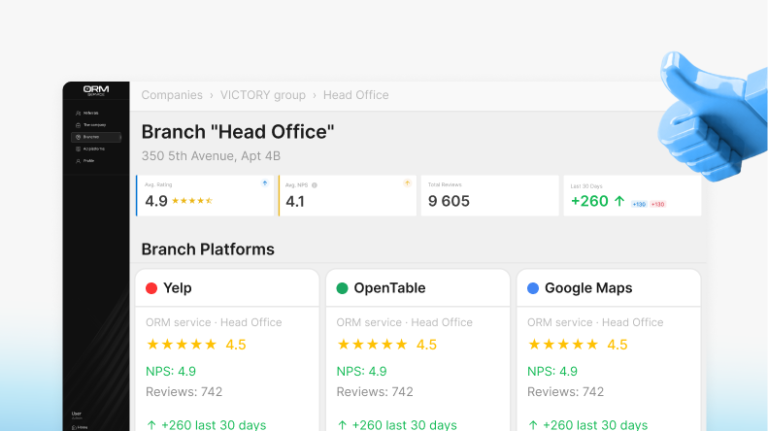
CENTRALIZED DASHBOARD
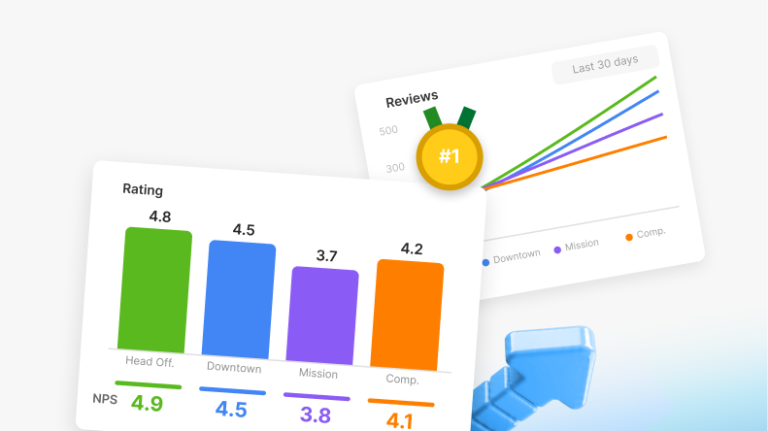
BENCHMARKING
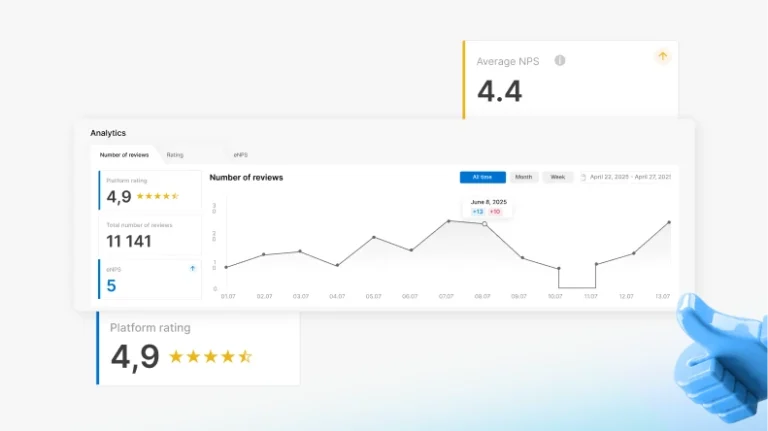
RATING TRENDS
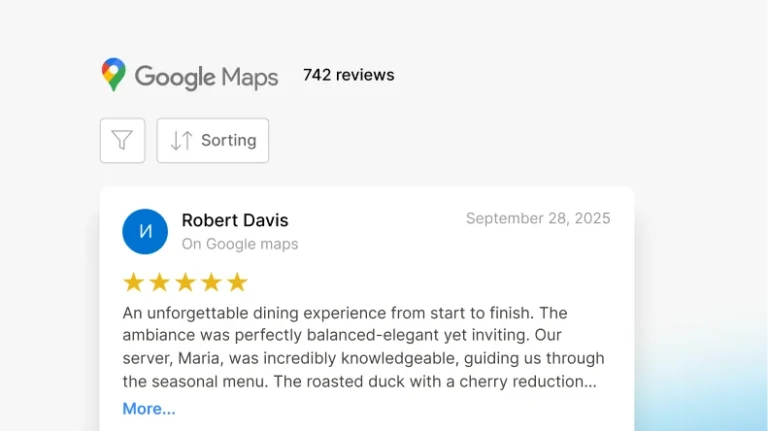
REVIEW MANAGEMENT
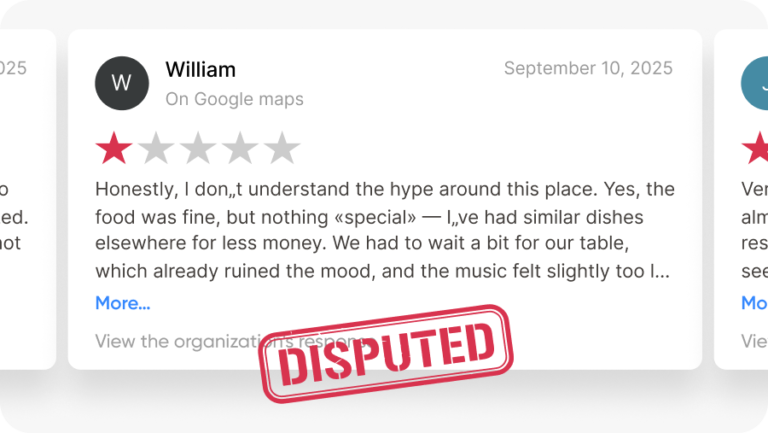
DISPUTING NEGATIVE REVIEWS
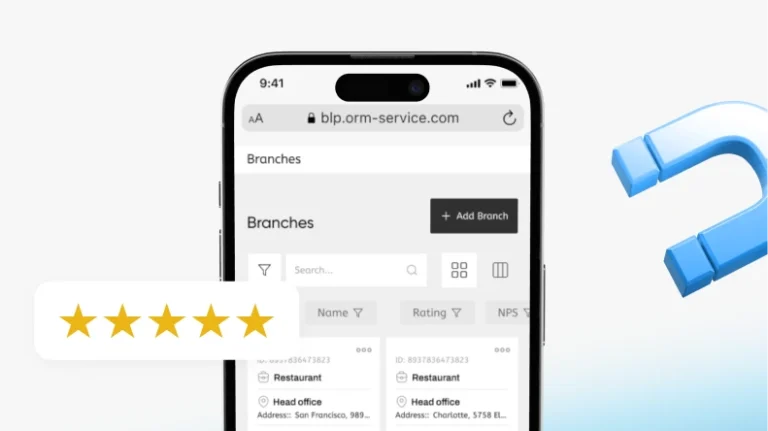
GATHERING POSITIVE REVIEWS
See it run on your network data
Frequently Asked Questions
Most multi-location reputation tools are SaaS — you buy the dashboard and your team does the work across every location. ORM Service is done-for-you: we monitor, respond, dispute, and gather reviews across your entire network. Your team gets the dashboard for visibility; we handle execution. For networks with 10+ locations, the math usually works out cheaper than hiring an in-house team.
That’s the core job. Every reply is written by our team using your brand guidelines and tone, so the response in Hartford reads the same as the one in Houston. No GM going off-script on Google because they had a rough Saturday.
Yes. Some locations might need just monitoring and basic responses (STARTER), others need active dispute work and benchmarking (GROWTH or ENTERPRISE). You can run a mixed setup across your network — high-traffic hero locations on premium plans, smaller units on STARTER.
The dashboard shows rating and NPS for every location, lifetime and over time. Compare any unit against the network average, against units in the same region, or against named competitors in its local market.
We file formal disputes against reviews that break platform policy: fake reviewers, competitor sabotage, wrong-location tagging (a common one for franchises with similar names in different markets), and off-topic content. The platform makes the final call. You get a written record per unit of every dispute we filed and the outcome the platform returned.
About Multi-Location & Franchise Reputation Management
Nobody picks your brand. They pick the branch closest to them, on the strength of what the last twenty people said about that branch.
What is multi-location reputation management?
Multi-location reputation management is running the same review process at every location you operate: watching what comes in, answering it in one voice, disputing what breaks platform rules, and collecting new reviews on site.
The arithmetic is what makes it a different job from managing one location. Forty units listed on three platforms each is a hundred and twenty profiles, and every one of them collects reviews whether or not somebody is reading them. Nobody at head office has a hundred and twenty tabs open. So the reviews get handled at the sites, by whoever has a spare ten minutes, which produces forty different response styles, forty different response times, and a set of problems that only reaches the corporate floor once it is large enough to show up in a report.
What a network needs is not more effort per location. It is the same standard at all of them, and one screen where the difference between them is visible.
Who owns the reply: corporate, the franchisee, or both
Most reputation problems in a franchise system are ownership problems wearing a customer service costume. Corporate holds the brand voice but not the login. The franchisee holds the login but is short two people this week. Between them sits a profile nobody has opened since 2022, quietly collecting one-stars.
There are three workable models, and we plug into whichever your agreements allow:
- Corporate-managed. Every reply across the network comes from one team under one set of guidelines.
- Franchisee-managed with guardrails. Units keep their autonomy, corporate keeps visibility.
- Mixed. Company-owned sites on one workflow, franchised units opting in, one dashboard over all of them.
Whichever one applies, the job is the same: the answer in Hartford should read like the answer in Houston, and it should not be written at midnight by a manager who just finished the worst shift of his month. That reply stays public for years. The shift it came out of lasted eight hours.
What one weak location actually costs
Ask what a unit at 3.2 stars costs and the honest answer is: more than that unit. For everyone in its trade area, it is the brand. They search the nearest branch, they read its reviews, they decide. That eleven other units average 4.5 is information they will never encounter.
The same reviews get read in rooms the unit manager never enters. A franchise candidate goes through location ratings before signing. So does a lender, a landlord picking between two tenants, and whoever eventually values the group.
Timing is where the money is. A unit sliding from 4.4 to 4.1 is a conversation with a manager and a fix that takes a fortnight. The same unit at 3.2 is a nine-month climb back, because the reviews that dragged it there stay visible the whole way. The difference between those two situations is usually about six weeks of nobody looking.
What ORM Service does across a network
Every location, every platform, and every review feeds one dashboard. Behind it sits the team:
- An analyst tracking every unit, so a slide at one site arrives as a number instead of a rumour from the field.
- Writers handling review management in one brand voice, so the answer reads the same in every market.
- A legal specialist disputing negative reviews, including the wrong-location claims networks deal with constantly.
- A designer producing the per-location assets behind automated review requests.
A personal manager keeps it coordinated, so there is one person to call rather than a support queue.
You work in the same account we do. The branches screen lists every location as a card with its rating, NPS, how many platforms it is on, how many of those are dragging it down, and how many reviews arrived in the last 30 days. The whole network reads top to bottom in one scroll. Open a location for its own review feed and the replies posted on it.
Comparison is a separate screen, and it is the one most operators live in. Put two to five items side by side over any date range: individual units when you want to know which of four sites in a metro is the problem, groups when the question is regional, competitors on their own tab in the same table as your own. Rating, NPS, total ratings, recent volume, and weak platforms line up in one view, with trend charts underneath.
Locations can be connected all at once or in batches, and plans work per location, so a flagship site can sit on a two-hour response target while smaller units stay on monitoring and standard replies.
Your reviews are operational data you already paid for
A network produces enough reviews to work as a measuring instrument, and most networks throw the readings away. Our dashboard reads every review for what customers actually mention, positive and negative, and files each mention into a category and a subcategory beneath it.
At one location that is a nice chart. Across forty it is a diagnosis. Two regions both sitting at 3.9 stop looking like the same problem when one is losing points on wait times and the other on cleanliness, and those two problems have nothing to do with each other: one is a staffing model, the other is a checklist nobody is running. The chart tells your QA program which sites to visit next and tells training which team needs a refresher.
It also closes the loop, which is the part most operators never get. Six weeks after a fix, the negative mentions in that category have either stopped arriving or they have not. No survey required, no mystery shopper, no quarterly wait. The customers are already telling you, in public, for free.
The fastest way to see this on your own network is a 15-minute demo, with your weakest units already on screen.

 Boost Your Reputation Now!