
Hotel Reputation Management That Drives Direct Bookings

Your Reputation Decides Tonight's Bookings

Built for independent hotels, boutique brands, and multi-property groups.
From single-property inns to portfolios of 50+ hotels.

Every OTA and review platform guests use to book.
Booking.com, Expedia, TripAdvisor, Hotels.com, Airbnb, and Google in one dashboard.

Higher OTA rankings, better review scores, more direct bookings.
Reputation moves ADR — and the change usually shows in 60–90 days.
Platform & Services
A real-time dashboard plus a real team behind every account. See your reviews and let us handle the work.
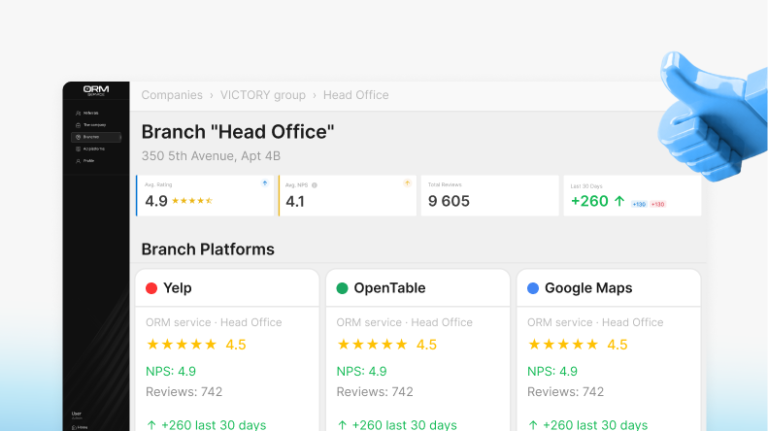
CENTRALIZED DASHBOARD
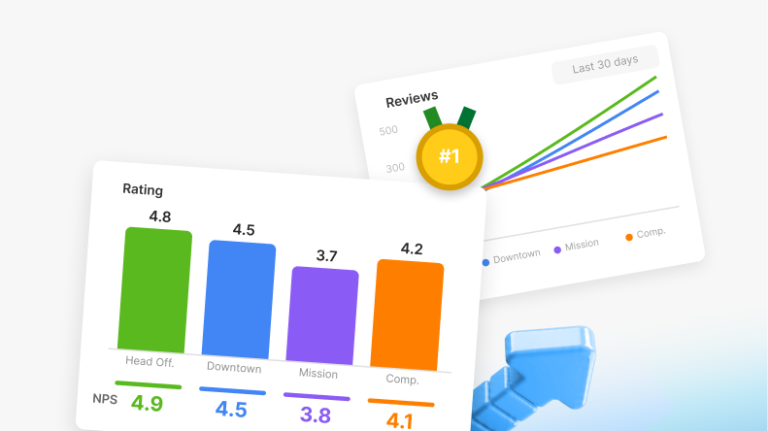
BENCHMARKING
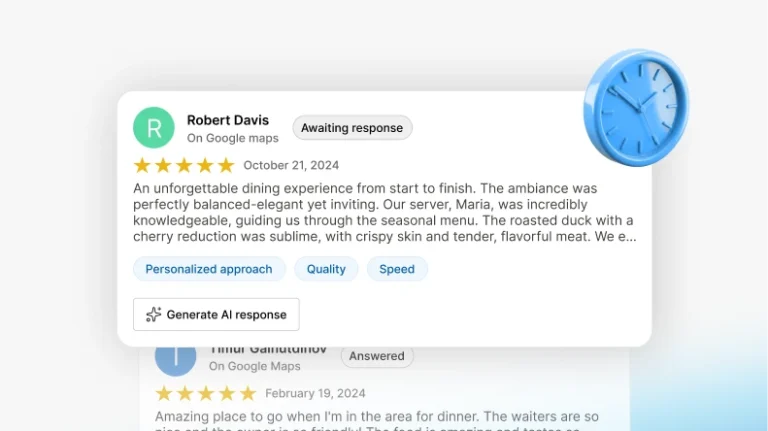
ZERO LAG
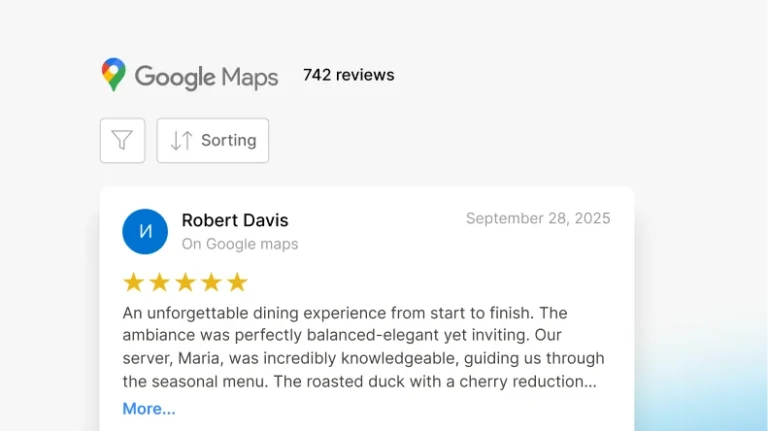
REVIEW MANAGEMENT
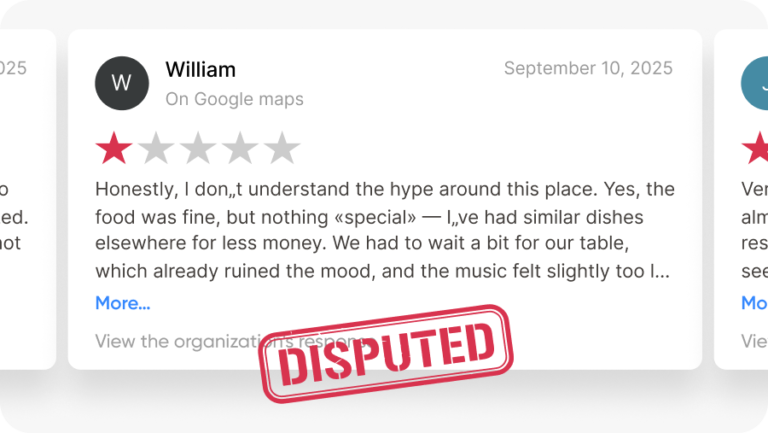
DISPUTING NEGATIVE REVIEWS
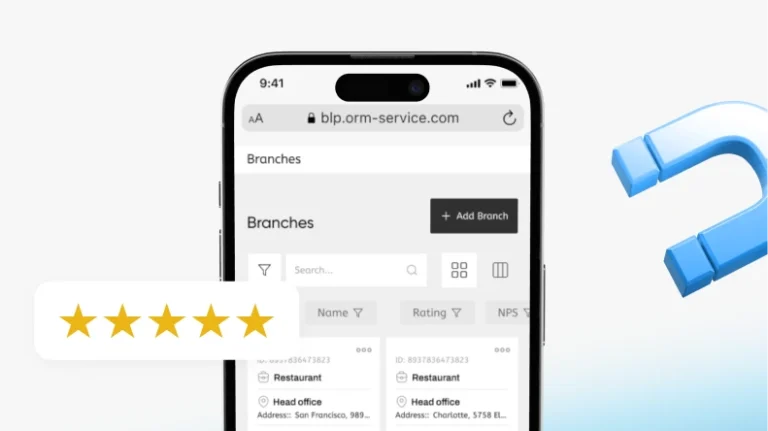
GATHERING POSITIVE REVIEWS
See it run on your hotel data
Frequently Asked Questions
Every platform that drives hotel bookings. Booking.com, Expedia, Hotels.com, TripAdvisor, Airbnb, Google, Yelp, Facebook, and Vrbo. All of them feed one dashboard with one response workflow.
We file formal dispute claims against any review that violates platform policy: fake reviewers, conflicts of interest, off-topic complaints, or content that breaks Booking and TripAdvisor guidelines. Not every dispute ends in takedown — the platform makes the final call — but each claim is filed, documented, and followed up by our team until the platform closes it out.
Add every property you want to track — your own hotels and any competitors you care about — and compare them side by side in one view. Rating, NPS, review volume, recent activity, and weak platforms line up across all branches, so you can see which property is dragging the average and which competitor is pulling ahead. One screen, no exports.
Target response time is 24-48 hours on STARTER, 4-12 hours on GROWTH, and 2-4 hours on ENTERPRISE. For hotels in competitive destinations we recommend GROWTH or higher. Most guests check reviews on the same day they book, so response speed shows up in conversion.
Booking.com, Expedia, and TripAdvisor all use review volume, recency, score, and response rate as ranking factors. Higher rankings produce more direct visibility, which lifts occupancy and gives you room to raise ADR. The shift usually shows up in 60–90 days of consistent execution.
About Hotel Reputation Management
Booking.com, Expedia, TripAdvisor, and Google each carry a different number for the same property, and all four sit between a traveler and your rate. Keeping them healthy is daily work, not a quarterly review.
What is hotel reputation management?
Hotel reputation management is the ongoing work of monitoring, responding to, and improving guest reviews across every channel a traveler checks before booking a room. For a hotel that means Booking.com, Expedia, TripAdvisor, Hotels.com, Airbnb, Google, and the review sections inside metasearch results, all of which carry a different score for the same property.
Done properly it covers four jobs at once: every new review is seen the day it publishes, every review gets a reply written for the guest who will read it next, reviews that break platform policy go into a documented dispute, and on-property review collection keeps fresh reviews arriving instead of waiting for whatever the OTAs happen to send.
The part most properties underestimate is consistency. A score built over three strong months erodes in six quiet weeks, because platforms weight recent reviews more heavily than old ones.
How OTA algorithms turn reviews into rankings
Every OTA sorts properties with a version of the same inputs: score, review volume, how recent those reviews are, and whether the property replies. Booking.com then layers guest filters on top. A traveler who ticks “Very good: 8+” removes everything below the line from the search entirely, and your photography, your renovation, and your rate strategy never get a look. The same thing happens again at 9+. Those thresholds behave like cliffs, and an 8.1 and a 7.9 are a rounding error to you and two different markets to a guest.
TripAdvisor ranks on quality, volume, and recency together, which is why a property that stopped collecting reviews eighteen months ago slides down its city ranking without a single new complaint. Google shows your rating beside your rate in the hotel pack, directly next to OTA listings selling the same room.
Underneath the average, three things usually explain what is happening to your placement:
- Recency. A 9.2 built up two years ago does not absorb four 6s posted last month.
- Response rate. Platforms track it, and guests read it as a preview of how the property handles a problem at 11 p.m.
- Distribution. A hundred 10s and ten 2s produce a comfortable average that hides one recurring operational failure.
All three are visible per property and per platform in the dashboard, which is where most ranking problems get identified before the average moves at all.
Why direct bookings depend on your Google rating
Booking.com and Expedia email their own bookers after checkout, so OTA review counts climb on their own while your Google profile stays quiet for months. That profile is the one supporting direct bookings, and the gap between the two ratings shows up in the exact comparison a guest makes before choosing where to book. When the number next to your website is lower than the number next to Expedia, the guest books through Expedia and you pay commission on a booking you had already won.
On-property collection is the only way to close that gap. The OTAs do email their guests, but the review they ask for goes back to the OTA. A QR code on the welcome card, the room desk, or the check-out folder works on everyone staying with you, OTA bookers included, and it points them at the profile you want the review to land on. Every response arrives in your dashboard tagged to the right property.
Why a reply is written for the next guest, not the last one
The guest who left the 3-star review has already checked out. A good reply still goes after him: it answers the complaint and gives him a reason to try you again. But he is unlikely to come back to the thread and read it. Everyone else will, and they are the ones deciding whether to book, which makes a review response a piece of pre-arrival marketing that happens to be addressed to somebody else.
The pattern that works is consistent across properties. Name the specific issue, say what changed, and invite the guest back without bargaining in public: anything involving money or personal details moves to email. Never dispute the guest’s version of events in public, and never post the same three-sentence template forty times, because prospective guests scroll and notice.
Language matters as much as tone. A review written in German or Portuguese that sits unanswered for a week reads to that market exactly the way an unanswered English review reads to yours.
What ORM Service does for hotels
We are not a dashboard you log into. A dedicated team runs hotel reputation management on your behalf, and the dashboard is there whenever you want to check a number.
Four roles sit behind every hotel account:
- An analyst watching every property across every OTA, so a cluster of complaints about breakfast service or a slow front desk becomes visible while it is still a staffing problem and not yet a pricing problem.
- Writers replying to guest reviews in the voice agreed during onboarding, with sensitive cases reviewed by a legal specialist before anything is posted.
- A legal specialist preparing documented disputes against reviews that break Booking, Expedia, or TripAdvisor policy.
- A designer producing the QR assets each property needs for on-site collection.
A personal manager coordinates the work and stays the single point of contact for your operations team.
You watch all of it from the same dashboard we work in. Every property you run sits on one screen as a card: current rating, NPS, how many platforms it is listed on, how many of them are pulling it down, total reviews, and how many arrived in the last 30 days. Competitor properties sit on their own tab in the same format. Open a property and you get its review feed with the reply we posted next to each review, filtered by star rating or date range.
The dashboard also reads the reviews for you. Every review is analyzed for the specific things guests mention, positive and negative, and each mention is sorted into a category and then into a subcategory beneath it. What comes out is a chart rather than a wall of text: how positive and negative mentions split across the property, which categories carry the negatives, and which subcategory sits underneath them. An 8.4 score tells you there is a problem somewhere, while the mention breakdown tells you it is the air conditioning in one wing and the wait at check-in on weekends.
Starting is light on your side. We connect the review profiles for every property you operate, plus any competitors you want tracked, and build the brand voice guide with you: tone, terminology, and what a reply must never say or promise in public. Nothing touches your PMS or channel manager, so there is no IT project between signing and the first reply going out.
The fastest way to see what this looks like for your property is a 15-minute demo run on your own review data.
Which hotels need it
The service fits independent hotels, boutique brands, and groups running anything from two properties to fifty, and the case gets stronger the more competitive the destination is. A property in a city where forty comparable hotels sit within the same Booking filter has less room to carry a weak score than a resort with no local substitute.
It becomes necessary when one of three things is true:
- Your score sits just below a filter threshold, so a share of guests never sees the listing at all.
- Reviews arrive faster than a front-office team can answer them properly, and replies get skipped during exactly the months that matter most.
- Your properties look inconsistent to a guest comparing them, with one hotel at 9.1 and another under the same brand at 7.8.
Any one of those is enough to change what you can charge, which is why the fix rarely waits for a better quarter.
How reputation shows up in ADR and occupancy
The chain runs in one direction. Higher scores and a strong response rate improve placement across OTAs and metasearch. Better placement produces more impressions, and more impressions with a credible score produce bookings that do not depend on discounting. Once occupancy holds without a rate cut, ADR has room to move.
The reverse chain is the one hotels usually notice first. Something breaks in March, the reviews publish in April, the score absorbs them by May, and by June revenue management is discounting to hold occupancy that used to sell itself. Reputation data trails operations by weeks, so a quarterly rating review tells you what went wrong long after the fix would have been cheap. Run continuously, the work compounds instead: each answered review supports the next, each removed policy violation protects the average, and each new guest review keeps the score recent enough to count.

 Boost Your Reputation Now!