One bad search result can quietly drain a company’s revenue, and the cleanup can run anywhere between zero and tens of thousands a month. That gap is where most people get lost. Some sign an enterprise contract they don’t need; others rely on free tools that can’t move a damaging link off page one. Affordable reputation management sits between those extremes. It covers the work that actually protects a brand, reviews, monitoring, and the search results people see, without the agency markup. This guide explains how it works, what it costs on the US market in 2026, and how to pick a provider without overpaying.
Why online reputation management matters for brands and individuals
Most buying decisions start with a search. Before someone hires a contractor, books a clinic, or signs with a vendor, they read what other people wrote first. A page of positive results builds trust; one damaging link near the top can end a sale before any conversation happens. The effect is sharper for small businesses and individuals, who have fewer pages of their own content to push a bad result down. A quiet slide from four stars to three can trim calls and bookings for months before anyone connects the drop to a search page.
Reputation problems rarely stay in one place. A Yelp complaint gets requoted in a forum thread, screenshotted across social feeds, and indexed by Google within days. Online reputation management means tracking those mentions, stepping in where a reply earns it, and shaping what surfaces when someone looks up your name. For brands, the stakes are revenue and hiring. For an individual, say a doctor, a lawyer, or someone job-hunting, what’s on the line is a career. Either way, the bill for leaving a problem alone usually climbs faster than the bill for handling it.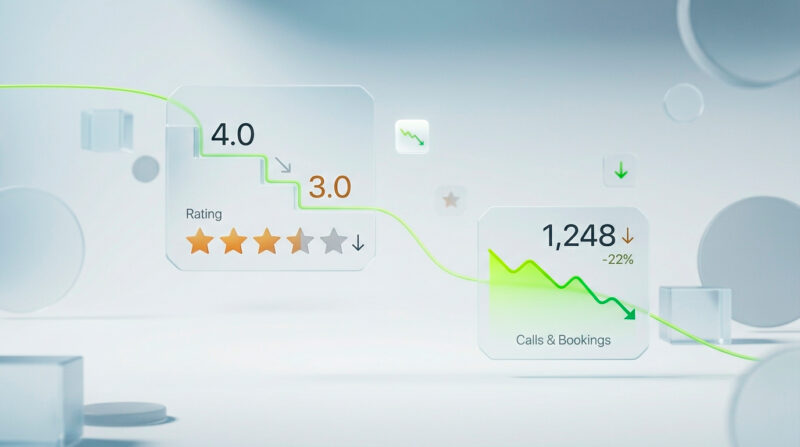
Core approaches to affordable reputation management
Affordable reputation management is built from a few core methods. Each targets a different problem: content that should come down, negative results that need to drop in ranking, and the constant churn of reviews and mentions that colors a brand’s image from one day to the next. The sections below cover what each method does. Pricing comes after.
Content removal and resolution
Some content can be taken down at the source, but only a narrow set of cases qualifies. Three routes cover most of them:
- Flagging to the platform: reviews that break a site’s policy, duplicate listings, doxxing, and posts that violate the terms can often be pulled by reporting them correctly or working with the platform directly.
- The legal route: court-ordered removals and de-indexing handle defamatory or illegal material a site won’t take down voluntarily.
- Resolution: contact the unhappy customer, fix the underlying issue, and give them a reason to update the review they left in frustration.
Removal is the cleanest outcome, because the content stops existing, but most negative content is someone’s lawful opinion that no platform and no provider can force offline. Knowing which bucket a problem falls into is the first real skill.
Reputation visibility and suppression
When content can’t be removed, the next option is to move it. Suppression pushes negative results down by publishing and strengthening positive ones until they rank higher. That means building out owned profiles, optimizing a website, placing articles and press coverage, and earning links so the good results outrank the bad. Search engines show only a handful of links on page one, and roughly nine in ten clicks never reach page two, so moving a damaging link from position three to position twelve usually solves the visible problem. Suppression is slower than removal and never instant; results often take a few months to settle as new content gains authority. Its reach is the payoff: suppression works on nearly anything, including opinions and dated coverage that nobody can delete, and that is why it does the heavy lifting in most reputation campaigns.
Review monitoring and brand mentions
Nothing in this work moves quicker than reviews and mentions, so they have to be tracked the moment they land. Two layers handle that:
- Review monitoring follows fresh ratings on Google, Yelp, Trustpilot, and niche industry sites, pings you when a negative one shows up, and lets you reply before a lone complaint defines the whole profile.
- Brand-mention monitoring widens the net to social media, forums, blogs, and news, so a problem gets caught while it’s small.
Priorities differ by field: a restaurant lives by its star average, while a law firm worries more about one defamatory article that ranks for its name. Most of it is routine rather than dramatic: answering reviews in one steady tone, asking every customer for honest feedback, and reporting anything that crosses a platform’s rules. Kept up over months, it pulls a star rating upward and keeps a brand aware of how it is being talked about. For most small businesses, this is where reputation management pays off most plainly, since reviews flow directly into both search rankings and purchase choices.
Affordable service packages and realistic pricing
Pricing for reputation management is famously opaque. Most providers don’t publish rates, and quotes for the same work vary widely. The figures below reflect typical US market ranges in 2026, and they map onto the methods above: monitoring and reviews sit at the affordable end, while suppression and PR cost the most because they take the longest. Where a plan lands depends on how visible the brand is and how much content needs to change.
Entry-level plans (per month)
Entry-level plans cover monitoring and review management, the maintenance work rather than active repair. In most cases these run from about $200 to $1,000 per month, with the lower end aimed at individuals and single-location businesses. A typical plan tracks reviews and mentions across the major platforms, sends alerts on negative activity, and includes a set number of review responses or generation campaigns each month. Pure DIY tools sit below this, often free to roughly $200 per month, but they monitor and notify without doing the work for you. Entry-level plans suit a brand that already looks healthy and wants to keep it that way: catch problems early, keep ratings climbing, and avoid the steeper cost of repairing a reputation that has already slipped.
Mid-tier packages for small business
Mid-tier packages add active work to the monitoring base. Alongside reviews and alerts, they fold in content creation, profile building, light suppression, and a strategist who owns the account. For small businesses on the US market, these typically range from about $500 to $2,500 per month, with most landing closer to $800 than the top of that band. This is the tier most growing companies need: more than a tool can deliver, less than a crisis agency charges. A package at this level might pair review generation with a few new pieces of content each month to lift both ratings and search results at once. The work is ongoing rather than one-off, since a reputation left alone tends to drift back down once the campaign stops.
Custom suppression and PR plans
Custom plans handle the hardest cases: a damaging news article, a page-one search problem, or a coordinated attack across several sites. Heavy suppression and PR work usually run from roughly $2,000 to $10,000 per month, and complex or crisis-driven projects can go higher. The cost reflects the volume of content involved, because pushing down a well-ranked negative result can take dozens of new pages, articles, and placements over several months. Most providers quote these projects individually rather than from a price sheet, since no two reputation problems are the same size. The honest framing is that custom work is the expensive end of an affordable service, not a separate luxury product. The methods match the cheaper tiers; there is simply far more of them. A search problem that fills five of the top ten results takes far more new content to bury than a single stray review ever will.
How to choose a cheap online reputation management company
A low price only helps if the work behind it is real. The danger with a cheap provider isn’t just thin results; a sloppy suppression job or planted reviews can trigger a penalty and drop the brand into a deeper hole. The goal is value, not the lowest invoice. A few criteria separate an affordable, capable provider from one that’s cheap for a reason. Look for these when comparing options:
- A rate you can read before signing, with the plan, what’s covered, and the contract length stated up front, and no fuzzy “custom quote” that swells later.
- Live tracking on whichever platforms matter in your field, instead of a review summary scraped together once a month.
- Review management that goes past watching: responding, generating honest feedback, and flagging anything that breaks a platform’s rules.
- Suppression built on original content and earned placements, rather than spammy link networks that get a site penalized.
- Reports in plain figures that show where rankings moved, how review patterns shifted, and what content went live, not a hand-wavy status note.
- A US-based team that understands American review platforms and search habits and answers inside your own time zone.
The cheapest option that fails most of these usually costs more in the end, because a botched campaign has to be redone. A company that covers all six at a fair monthly rate is the affordable middle most brands actually want. ORM Service, for one, keeps its plans on a public pricing page and offers a demo and a free trial, so you can see the review dashboard and the cost before you commit to anything.



