Almost every guide to online reviews lands on one instruction: ask. Yelp is the exception, and not a small one. Alone among the big platforms, Yelp tells businesses outright not to ask customers for reviews, then backs that up with software built to sideline anything that smells coached. So the goal here is narrower than it first looks. The point is not to ask more people. It is to get Yelp reviews that clear the filter and actually land on your page.
That one difference rewrites the whole approach. The upside is that what gets you reviews on Yelp is the same stuff that makes a business stronger anyway. A profile that is actually finished. Photos that are actually yours. Service people remember out loud. A handful of low-key nudges that send the right customer to your listing without a word about reviewing. Six of them, below.
Why Yelp reviews matter for local businesses
Picture how someone settles on a roofer they have never met. They search, they skim, and inside about ten seconds most of the page is already ruled out on two signals: the star rating and how many people stand behind it. Three reviews at five stars feels like a fluke. A hundred and forty at four-and-a-half feels like a fact.
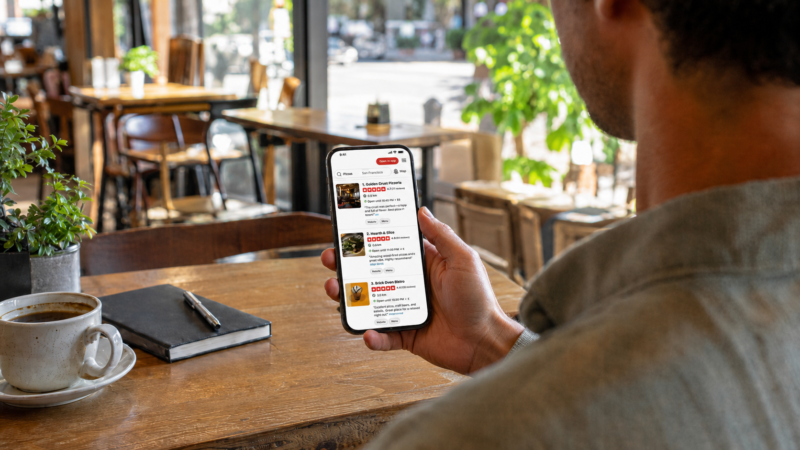
Volume and rating lean on each other. A spotless score with barely any reviews looks lucky; a tall pile of them stuck at 3.2 looks like a pattern, and not the kind you want. Pages that win usually carry both, plus enough recent activity to prove the doors are still open. That activity earns its keep twice over, because Yelp tilts toward lively pages when it decides what to show for a category search.
The reach does not stop at Yelp, either. Those ratings spill into Google, into Apple Maps, into whatever a voice assistant reads back. A strong showing there improves how you look in every one of those places. Skip your Yelp page and you are not ignoring one channel. You are letting your reputation go dim across half a dozen at once, which is a strange thing to do on purpose.
How Yelp is different: the no-solicitation rule
Here is the part that ambushes owners. Yelp’s content guidelines tell business owners flat out not to ask customers to write reviews, and Yelp’s Don’t Ask for Reviews page is just as blunt about the rest: never offer a discount, a freebie, or payment in return for one. Not a gentle suggestion. A rule, enforced by an automatic recommendation system that hunts for reviews that look prompted and quietly pulls them out of the score everyone sees.
Why it stings is worth a minute. By its own account, Yelp recommends about 70% it takes in. The rest get parked in a “not recommended” drawer that no longer touches your star average. So that five-star rave you nudged a regular into writing can slide straight into the drawer, glowing and useless. Every method below is built to keep the asking out of the equation.
Why buying (or soliciting) Yelp reviews backfires
Paying for reviews is the version that ends worst. The pitch is seductive, sure: buy forty glowing reviews, skip a year of grinding. Two problems. First, as of October 21, 2024, it is flatly illegal in the US, courtesy of the FTC’s rule banning fake reviews, which prices buying or selling them at up to $51,744 per violation. Nobody calls that a slap on the wrist.
Second, even ordinary soliciting can boomerang. Catch Yelp’s eye with a sudden burst of coordinated or paid-for activity and you may collect a Consumer Alert: a public banner, stamped on your own page, warning visitors the business looks like it tried to rig its reviews. One of those outweighs a fistful of one-star ratings, because it does not whisper “bad service.” It shouts “do not trust them.” And there is a quieter tax on top. Ask only the customers you already know are thrilled, and your average drifts upward in a way sharp readers catch instantly. That drift is the precise thing Yelp’s system exists to scrub out.
What Yelp allows vs. what it penalizes
Sort the do’s from the don’ts into two stacks and the logic snaps into place. You are free to send people to your page and make reviewing effortless once they choose to. What you cannot do is ask for the review, hint for it, or hand anyone something in return.
| What Yelp allows |
What Yelp penalizes |
| A “Find us on Yelp” decal in your window |
Asking a customer to “leave us a Yelp review” |
| A Yelp badge or link on your website |
Emailing customers a direct review link |
| Mentioning that customers found you on Yelp |
Offering a discount or freebie for a review |
| Replying politely to the reviews you already have |
Standing up a review kiosk or tablet in-store |
| Sharing existing reviews in your own marketing |
Paying a service to post reviews |
Read the left column again and notice what is missing: the word “review” never appears. That is the whole game. You supply the visibility and the reasons to talk; the customer supplies the verdict, unasked.
Earning better reviews the right way
With the rules clear, the work moves from chasing reviews to deserving them. These six strategies all pull in one direction: more visibility, a sharper experience, and more reasons for the right customer to find your page and speak up on their own.
Not one of them asks you to ask. That is what keeps them safe, and it is also why they outlast the businesses that game the system for a quarter and then get flagged for it.
1. Claim and fully optimize your Yelp business page
First, claim the page. Then refuse to leave a single field blank. A half-built profile costs you twice: it slides down in Yelp search, and it hands the visitor a reason to click somewhere else. Get the dull details exactly right while you are at it. A stale phone number or last winter’s hours is how you earn a furious review for a problem you never knew you had.
A finished profile usually carries:
- The real name, address, phone, and a working website link
- Hours that are actually true, holidays and seasonal shifts included
- Categories and service areas that match what you genuinely do
- A short, specific blurb written for humans, not stuffed with keywords
- Menus, prices, and service options wherever they fit
Then keep it fresh. Change something on the page the day it changes in real life. A listing that looks tended reads as an open, working business, and Yelp tends to return the favor with better placement.
2. Add strong photos and keep your page active
Pictures pull more weight than most owners expect. Your own shots of the room, the plate, the crew, the finished job hold a browser’s eye and tip them toward walking in. Generic stock does the reverse, murmuring “could be anywhere” and giving a visitor nothing to grab. So shoot your own, swap them in often, and do not let the gallery sit untouched since 2019. Fresh photos and current details enhance how the whole page reads to a stranger, and they improve the odds that stranger sticks around.
Photos are only one slice of staying active, though. Post the occasional update, knock out the questions waiting in Yelp’s Q&A, keep the facts current, and you tell the platform that somebody is home. Lively pages surface more often, more eyes mean more visitors, and more visitors mean more people who might write something under their own steam.
3. Deliver an experience worth reviewing
Nothing else on this list stands in for the work right here. Unprompted Yelp reviews come from a single trigger: something stuck out, for better or worse. A part that showed up a day early. A leak fixed on the first visit instead of the third. A small surprise, like the barista who slides a free cookie across the counter for a regular’s kid. Moments like that create the itch to open the app and say so out loud. A landscaper who texts a quick before-and-after photo the same afternoon, with no follow-up ask, will hear clients bring it up in reviews for months.
Chase delight, not a passing grade. The merely satisfied say nothing and move on. The pleasantly surprised talk, and on Yelp that organic enthusiasm is the only kind of review that dependably feeds your number. Put bluntly: a great experience is the review strategy. There is no second one hiding behind it.
4. Make your Yelp page easy to find without asking
You are barred from asking, but nothing stops you from making the page impossible to miss. A “Find us on Yelp” decal on the door. A small badge tucked into the email signature. A link in the footer of your site. Each one walks a customer toward the listing without a syllable about writing anything.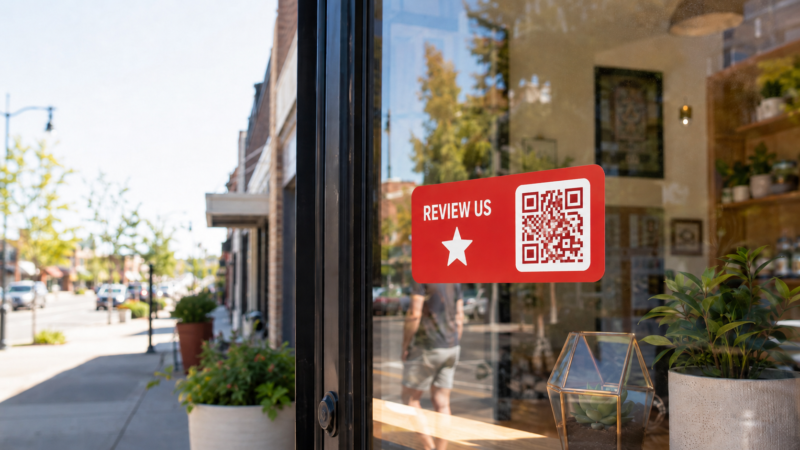
Yelp even gives away review badges and widgets you can bolt onto your own website, and using them sits completely inside the rules. The seam runs right here: walking someone to your page is fine; telling them to review you once they are standing on it is not. A quiet “see us on Yelp,” no instructions attached, lets the customer who wants to take it from there.
5. Use Yelp’s engagement tools
The platform’s own features hand you clean, compliant ways to stay visible. Answer messages and Request a Quote pings fast, and your response-time badge improves, which buys trust before anyone walks in. Field the questions sitting in the Q&A and you read as switched-on. Each exchange is one more shot at the kind of impression a customer later turns into their own words.
Do not forget the social wiring underneath all this. Yelp users have friends and followers who watch their activity, so one heartfelt review from a plugged-in Yelper can travel further than a dozen quiet ones. You cannot force that. A genuinely good visit just increases the odds it happens by itself.
6. Turn first-time customers into regulars
Your regulars are reviewers in waiting. Loyalty and the urge to vouch for a place grow from the same soil, namely a relationship somebody wants to keep. A customer on visit number five has every reason to stand up for you in public; the one-and-done stranger has almost none. Which means the job of earning better reviews and the job of keeping customers turn out to be very nearly the same job.
Learn names. Remember the usual order. Make the second visit run smoother than the first. A shop that turns a packed lunch period in June into a roster of regulars rarely has to wonder where its reviews come from. The reviews trail the relationships, the way they always have.
Managing and responding to reviews the right way
Collecting reviews is only half the job. What you do with the ones already posted decides whether the next visitor believes any of them. So reply, to the cheers and the gripes alike, in a steady, specific, public voice. Two lines of thanks to a happy customer proves you are paying attention. A composed answer to an angry one shows every future reader exactly how you behave on a bad day.
For businesses managing this across more than one channel, the practical layer can be just as important as the reply itself. ORM Service can create a branded QR code that fits the company’s visual style and sits naturally on tables, front desks, receipts, packaging, or other customer touchpoints as a quiet way to help people find the business online, without turning it into a pressured review ask. It can also bring reviews from Yelp and other platforms into one dashboard, so owners can spot new feedback, prioritize replies, and keep the public tone consistent before a small complaint starts looking like a pattern.
Do not take the bait, and never dangle a fix in exchange for deleting a bad review, which trips the guidelines and can summon an alert all its own. Some reviews do genuinely break Yelp’s rules, though: a personal attack on a staffer, leaked private details, a “review” from someone who was never a customer. Those you can flag for moderation. Just know the bar is high. Yelp will remove reviews that violate policy, not reviews that merely sting. So when the criticism is harsh and fair, skip the takedown request and write the calm public reply instead. Handled well, a rough review can leave the page looking better than a wall of unbroken praise, because nothing reassures a wary shopper like a business that owns a mistake without flinching.
Turning Yelp visibility into long-term growth
A healthy Yelp page snowballs. Each real review nudges your ranking, the bump pulls in more visitors, a slice of them buy, and a slice of those eventually write reviews of their own. The wheel only turns on real experiences, which is the entire reason the rules exist. The rating you cannot fake is the only one worth owning.
So the long game is dull, proven, and slow on purpose. Keep the profile current. Refresh the photos. Answer fast. Reply to reviews like a professional rather than a wounded party. And pour most of your energy into service good enough that people raise it unprompted. Run that for twelve months and the reviews stack up without a single request. No shortcut beats it, and given the rules, there doesn’t need to be one.



